
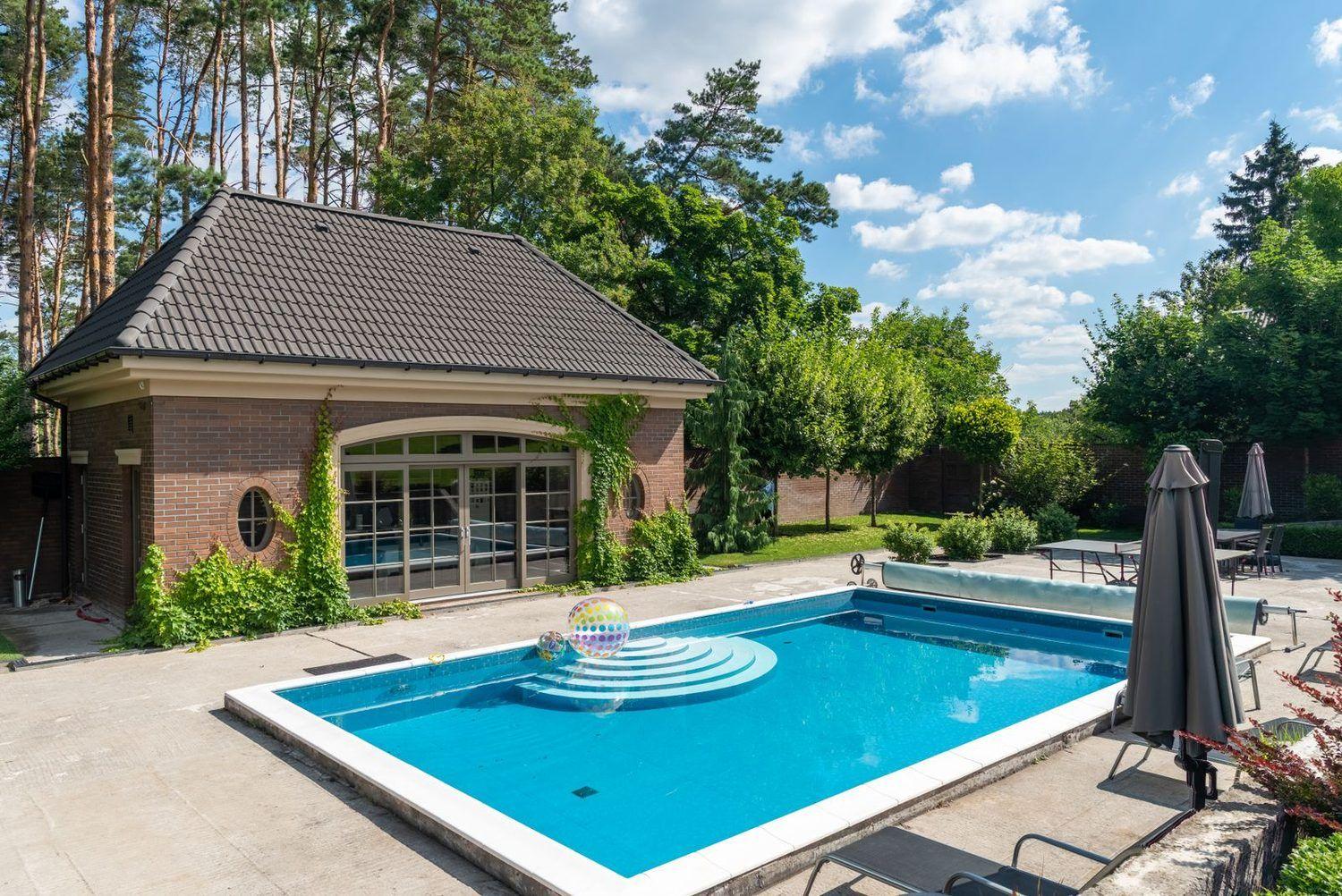
Run your pump long enough to push every gallon in the pool through the filter at least once a day. Pool techs call that one turnover. In a Marin summer, plan on one full turnover as the floor, and add time when the water runs warm, the trees are shedding, or the kids swim every afternoon.
How do you work out your own run time?
Divide your pool's volume in gallons by your pump's flow in gallons per minute. The answer is the number of minutes one turnover takes. A 20,000-gallon pool with a pump moving 50 gallons a minute needs 400 minutes, a bit under seven hours.
The flow on the pump's label is a best case. A dirty filter, a packed skimmer basket, and long pipe runs out to the equipment pad all slow the water down. If your automation or a flow meter shows real gallons per minute, use that number.
Why does summer need more time?
Warm water grows algae faster, and sunlight breaks down free chlorine. Swimmers add sunscreen, sweat, and whatever they tracked in from the lawn. The pump and filter clear that load, and they only work while the motor runs.
Marin's microclimates pull the number in different directions:
- Inland heat. Pools in Novato, San Rafael, and the Ross Valley see the warmest water and the strongest sun. These pools want the longest summer schedule.
- The fog belt. In Mill Valley and Sausalito, cooler mornings keep the water from heating as fast. One turnover often holds, as long as the chlorine reading stays steady between visits.
- Heavy trees. Oak pollen, redwood needles, and eucalyptus bark sink if the skimmer isn't pulling. Under a big canopy, run the pump through the hours when the wind kicks up and the debris lands.
Salt pools add one more reason. The salt cell makes chlorine only while water flows through it, so a short schedule starves the pool of sanitizer.
What time of day should the pump run?
Run it in daylight. That's when the sun eats chlorine and when people swim, so you want the water moving and the sanitizer mixing. You can split the run into two blocks, say a morning stretch and an afternoon stretch, and the filter doesn't care.
Watch your electric rate. Many Marin homes sit on a time-of-use plan through PG&E, with generation from MCE or PG&E. Those plans charge the most during a late-afternoon and evening peak. Your bill lists your plan's exact peak hours. Set the timer to finish before that window opens.
Does a variable-speed pump change the math?
It changes the strategy. A pump's power draw drops faster than its speed, so a variable-speed pump at low RPM moves a lot of water for little electricity. With one of these, you run longer at a gentle speed instead of short and hard.
Bump the speed up when you need it. Pool cleaners, heaters, and spa spillways each need a minimum flow, and your automation can schedule those boosts on their own. Keep the base speed high enough that the skimmer still pulls debris off the surface.
How can you tell the schedule is too short?
- The water turns hazy by midweek, even with chemicals in range.
- Your chlorine reads at or near zero before the next service visit.
- Algae shows up first in corners, on steps, and behind ladders, where the water moves least.
- Leaves and needles sit on the surface every morning.
See one of these, and add an hour before you add more chemicals. Too much run time shows up in one place only: your power bill.
If you want us to check your pump's real flow and set a summer schedule that fits your yard, call us at (415) 562-8143. You can also send a request and we'll get back to you.